
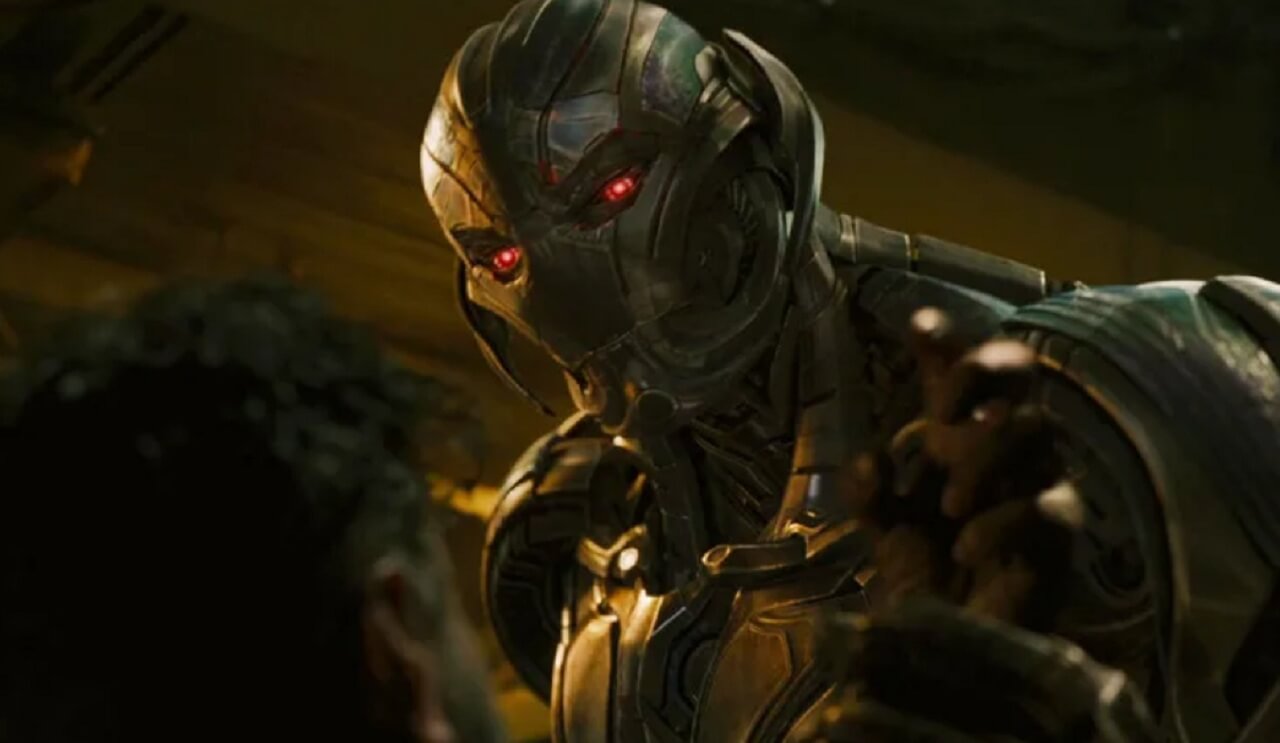
When Marvel Studios released Avengers: Age of Ultron in 2015, one of its biggest creative challenges was bringing the villain Ultron to life. Voiced by James Spader, Ultron was the Marvel Cinematic Universe’s first major robot antagonist. While robots can be terrifying on screen—think The Terminator—they can also risk looking unintentionally silly.
According to the behind-the-scenes book The Story of Marvel Studios: The Making of the Marvel Cinematic Universe, the visual development team struggled to make Ultron both threatening and capable of conveying human emotions. Director Joss Whedon explained his vision:
“In the comics, Ultron always has his mean face on. But we couldn’t do two hours of a mean face — that’s a Green Goblin mistake. I was interested in his soulfulness, his sadness, and in doing everything people don’t do with robots.”
What Was the “Green Goblin Mistake”?
Whedon’s comment referred to the 2002 Spider-Man film’s portrayal of the Green Goblin. Actor Willem Dafoe wore a rigid mask that conveyed only one expression: malevolent glee. While the mask worked for toy sales, it limited the character’s emotional range. Dafoe’s voice carried the performance, but the lack of facial nuance made calmer scenes feel awkward.
For Green Goblin, the audience knew there was a human under the mask, which softened the issue. Ultron, however, was entirely inhuman. Whedon wanted him to feel soulful and emotive, not just a static robotic menace.
Designing Ultron for the MCU
Marvel’s head of visual development, Ryan Meinerding, explained the design dilemma:
“We’re often trying to balance a character — often an icon — from the comics with the needs of the movie’s story. But Ultron was harder because those are two disparate directions. The point of the character in the comics was to be dispassionate, with a singular, screaming expression. Joss wanted that in some of the Sub-Ultrons, but not Ultron Prime. So the challenge became, ‘How can we get something close to that which can still be a fully emotive face?’”
The final design gave Ultron a more expressive face than his comic counterpart, avoiding the “Green Goblin mistake.” Yet critics noted that while the CGI was solid, Ultron’s look didn’t leave a lasting impression. He became another entry in the MCU’s lineup of “big gray villains.”
How the MCU Evolved After Ultron
Ultron’s design reflects how Marvel was still finding its footing in balancing comic-book accuracy with cinematic storytelling. If Age of Ultron had been released later, after the bold success of Guardians of the Galaxy in 2014, the villain might have been more colorful and extreme.
By Phase 3, Marvel embraced more experimental visuals and character designs. Ultron, caught between early MCU caution and ambitious storytelling, may have benefited from that later creative freedom. Still, given the scale of Age of Ultron, the fact that Marvel pulled off the project at all remains impressive.


Spice Girls Reunite to Celebrate Emma Bunton’s 50th Birthday in the English Countryside