Key Points
- Ron Perlman makes a dramatic return in Fallout’s latest episode, “The Other Player.”
- The Enclave is unveiled as a central antagonist, deepening the series’ political and moral stakes.
- Hank’s use of a mind-control chip raises ethical questions about free will versus security.
- Lucy’s disillusionment highlights the dangers of authoritarianism and the cost of stability.
- The episode explores global parallels, from surveillance debates to leadership struggles.
A Return That Resonates
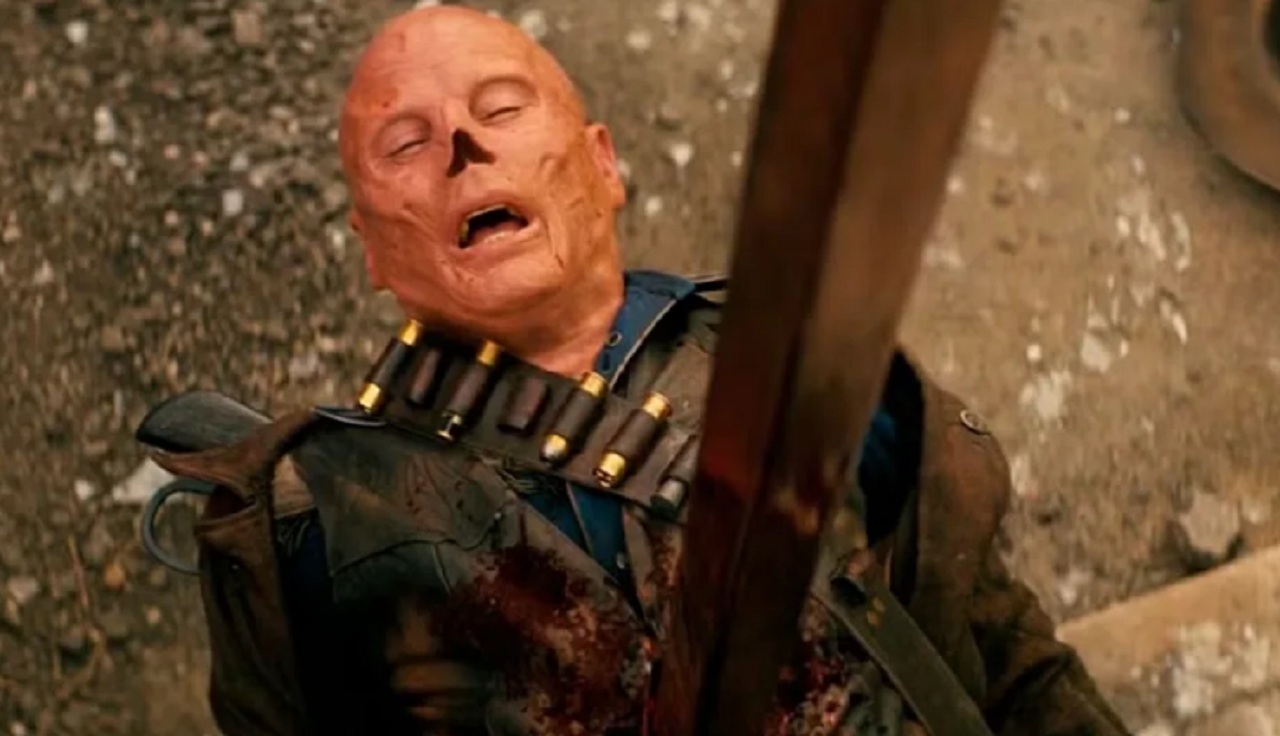
The newest installment of Fallout, titled “The Other Player,” delivers both action and layered storytelling, earning strong reviews for its thematic depth. The episode reintroduces Ron Perlman, this time as a super mutant, while unveiling the Enclave as a formidable antagonist. Together, these elements push the narrative into darker territory, forcing viewers to confront questions about morality, identity, and survival in the wasteland.
Power Struggles and Ethical Quandaries
At the heart of the episode is Hank’s acquisition of a mind-control chip, which allows him to manipulate a workforce stripped of individuality. The storyline raises profound ethical dilemmas: is safety worth the loss of free will?
The depiction of ex-cannibals and Legionaries being subjugated underscores the tension between security and humanity. Hank’s musings about people fighting over bottlecaps—a symbol of value in the wasteland—serve as biting commentary on the triviality of real-world conflicts.
Lucy’s Disillusionment
Lucy, shaped by her vault upbringing, represents idealism and hope. Yet her father’s experiments leave her horrified, forcing her to confront the moral cost of stability. Her arc reflects a broader cultural critique, reminding audiences that not all sacrifices made in the name of peace are justifiable.
Character Shifts and Viewer Impact
| Character | Before Episode | After Episode | Impact |
|---|---|---|---|
| Hank | Powerful but conflicted | Manipulative leader | Exploits others for his vision of peace |
| Lucy | Idealistic and hopeful | Disillusioned and horrified | Realizes the price of stability |
| The Ghoul | Struggling with identity | Gains self-realization | Highlights human connection amidst chaos |
| Viewers | Entertained | Confronting ethical dilemmas | Encouraged to reflect on real-world issues |
Global Parallels
The themes of Fallout resonate far beyond its fictional wasteland. In the United States, debates around surveillance and personal freedom mirror Hank and Lucy’s conflict. In Canada, the show’s portrayal of vault divisions reflects multicultural tensions. Meanwhile, in the UK and Australia, the ideological battles in Vault 33 echo real-world debates over populism and pragmatic leadership.
What Lies Ahead
As the season progresses, several key developments are expected:
- The Enclave’s Motives: Future episodes will likely explore the Enclave’s historical context and nuclear ambitions.
- Vault 33 Conflict: Ideological divisions may escalate into external confrontations, raising the stakes.
- Humanity’s Core: Character arcs will continue to probe what defines humanity in a world built on erasure.
With Ron Perlman’s return and the Enclave’s rise, “The Other Player” cements itself as one of the franchise’s most thought-provoking entries, blending entertainment with sharp cultural critique.