
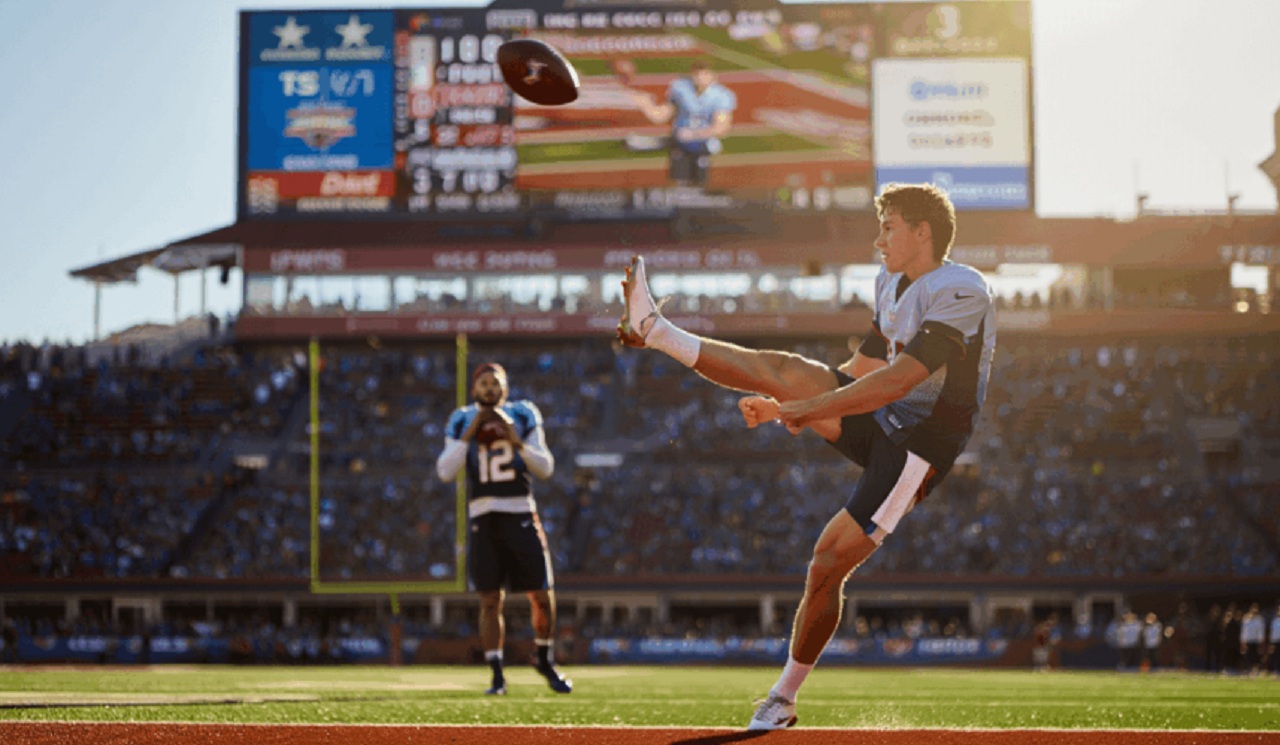
A touchback is one of the most common yet misunderstood plays in American football. Whether you’re a seasoned fan or new to the game, understanding touchbacks is essential for following the strategic elements of kickoffs, punts, and defensive plays. This comprehensive guide explains everything you need to know about touchbacks in football.
Touchback Definition: What Happens During a Touchback?
A touchback occurs when the ball becomes dead on or behind a team’s goal line, provided the opposing team is responsible for sending the ball into the end zone. When a touchback is declared, the receiving team automatically gets possession at their own 25-yard line for kickoffs, or the 20-yard line for other situations.
The touchback represents a neutral outcome that prevents dangerous plays near the goal line while maintaining game flow and player safety.
How Does a Touchback Work in Different Situations?
Kickoff Touchbacks
The most common touchback scenario happens on kickoffs. When the kicking team sends the ball into the end zone during a kickoff, the receiving team has two options: attempt a return or take a knee for a touchback. If the returner catches the ball in the end zone and takes a knee, or if the ball goes through the end zone without being touched, the receiving team starts their drive at the 25-yard line.
Since 2018, the NFL moved the touchback starting position from the 20-yard line to the 25-yard line on kickoffs to encourage more touchbacks and reduce dangerous high-speed collisions during returns.
Punt Touchbacks
When a punted ball enters the end zone and is not returned, a touchback is called. However, the offensive team starts at the 20-yard line rather than the 25-yard line. Punters often aim to pin opponents deep with kicks that land inside the 20-yard line rather than risk a touchback.
Interception and Fumble Touchbacks
If a defensive player intercepts a pass or recovers a fumble in their own end zone and chooses not to advance the ball, taking a knee results in a touchback. The defending team then starts their offensive possession at the 20-yard line.
A unique rule applies when an offensive player fumbles the ball forward into the opponent’s end zone: if the defense recovers or if the ball goes out of bounds in the end zone, it results in a touchback for the defense rather than the offense retaining possession.
Touchback vs Safety: Understanding the Difference
Many fans confuse touchbacks with safeties, but they’re opposite outcomes. A safety occurs when the offensive team is responsible for the ball becoming dead in their own end zone, resulting in two points for the defense. A touchback occurs when the defensive team or kicking team sends the ball into the end zone, with no points scored.
The key distinction: Who caused the ball to enter the end zone determines whether it’s a touchback or safety.
Strategic Considerations: When to Take a Touchback
For Kick Returners
Modern football analytics heavily favor taking touchbacks on kickoffs. With possession starting at the 25-yard line, teams would need to return kicks beyond that point to gain an advantage. Statistics show that most kickoff returns average fewer than 25 yards, making touchbacks the safer, more predictable choice.
However, elite returners with strong blocking may still attempt returns in critical game situations where field position or momentum matters more than average outcomes.
For Kickers and Punters
Kickers aim to maximize touchbacks on kickoffs to prevent explosive return plays. A touchback guarantees the opponent starts at the 25-yard line rather than risking a return that could reach the 30, 40, or even result in a touchdown.
Punters face a different calculation. Pinning opponents inside their own 10-yard line is far more valuable than allowing a touchback at the 20. Elite punters develop the skill to angle kicks out of bounds or have them downed by teammates just before the goal line.
College Football Touchback Rules
College football follows similar touchback rules with one notable difference: touchbacks on kickoffs place the ball at the 25-yard line, matching NFL rules. However, the targeting and fair catch rules differ, creating slightly different strategic considerations for when teams take touchbacks versus attempting returns.
Touchback Rule Changes and Player Safety
The NFL’s decision to move kickoff touchbacks from the 20 to the 25-yard line reflected growing concerns about player safety. Kickoff returns feature the highest injury rates of any play in football due to the high-speed collisions involved.
By incentivizing touchbacks through better field position, the league successfully reduced the number of kickoff returns and associated injuries without eliminating kickoffs entirely. This change exemplifies how rule modifications can prioritize player welfare while maintaining the game’s fundamental structure.
Common Touchback Scenarios and Outcomes
Understanding when touchbacks occur helps fans anticipate game flow:
- Deep kickoffs into the end zone: Touchback, ball at the 25-yard line
- Punt into the end zone: Touchback, ball at the 20-yard line
- Interception in the end zone with no return: Touchback, ball at the 20-yard line
- Kickoff out of bounds: Receiving team’s choice of the 40-yard line or rekick
- Fumble through opponent’s end zone: Touchback, possession changes
Touchback Statistics and Trends
Touchback rates have increased dramatically in recent years. In the 2023 NFL season, approximately 65% of kickoffs resulted in touchbacks, up from roughly 40% before the rule change. This trend reflects both rule modifications and kickers’ increased leg strength.
Teams now employ specialists who can consistently kick deep enough to produce touchbacks, viewing this as a defensive weapon that prevents game-changing return touchdowns.
Key Takeaways About Touchbacks in Football
Touchbacks serve as an important safety mechanism and strategic element in football. They provide standardized field position outcomes, reduce dangerous plays, and create interesting strategic decisions for coaches and players. Whether on kickoffs, punts, or turnovers, understanding touchbacks enhances your appreciation of football’s tactical complexity.
The next time you watch a game and see a returner take a knee in the end zone, you’ll understand the calculation behind that decision and how it impacts the game’s flow and strategy.