
Key Points
- The Northrop Grumman B-2 Spirit first flew in 1989 and remains one of the most advanced bombers ever built.
- Its flying-wing design and radar-absorbing materials make it nearly invisible to detection.
- The aircraft can travel 6,000+ nautical miles without refueling, carrying both conventional and nuclear payloads.
- It has seen combat in Kosovo, Afghanistan, and Iraq, striking high-value targets with precision.
- At $2 billion per unit, only 21 B-2s were produced, making it one of the most expensive aircraft in history.
A Revolutionary Design
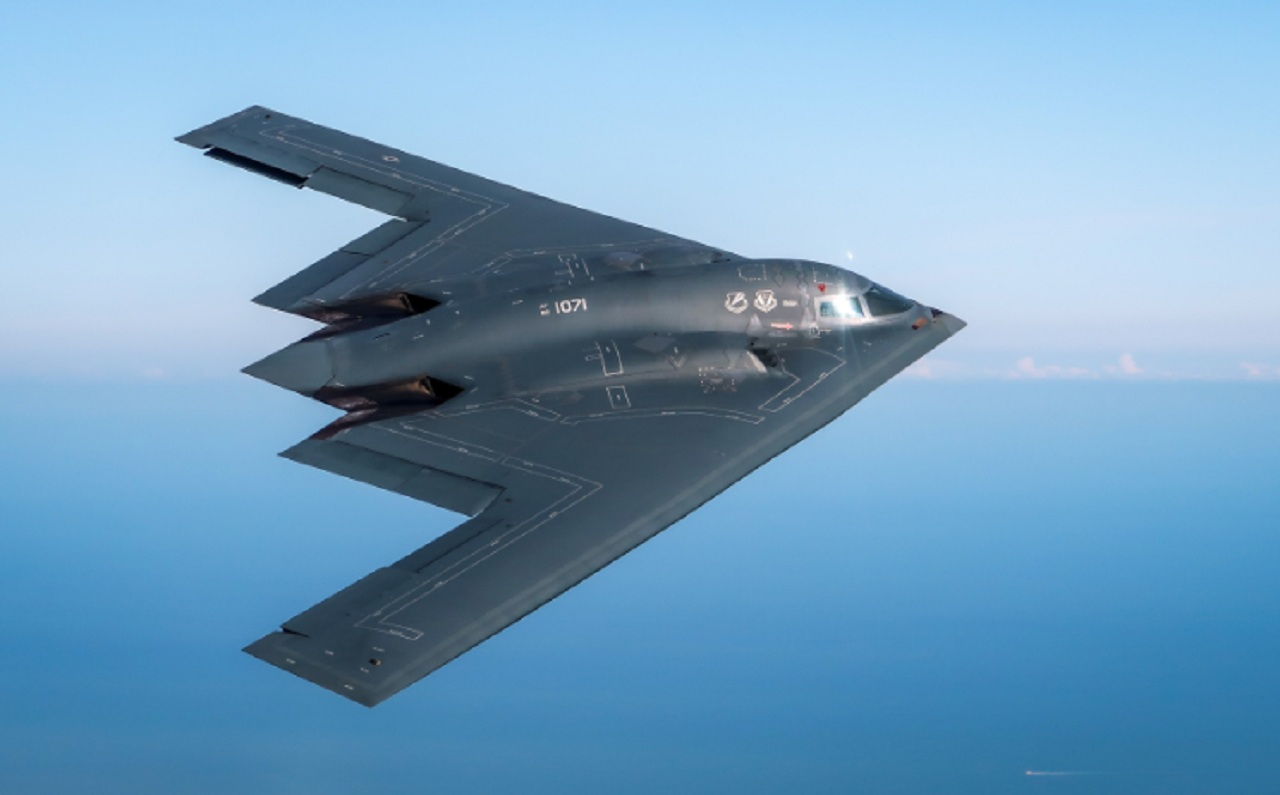
When the B-2 Spirit debuted in 1989, it represented a radical departure from traditional bomber design. Its sleek flying-wing shape, lacking a visible fuselage or tail, was engineered to minimize radar reflection. Combined with radar-absorbing materials and precise structural alignment, the aircraft could penetrate heavily defended airspace undetected.
Long-Range Strike Capability
The B-2’s endurance remains unmatched. With a range exceeding 6,000 nautical miles without refueling—and significantly more with aerial support—it can launch missions from distant bases and strike targets across the globe. Its ability to deliver both conventional and nuclear payloads cements its role in America’s strategic deterrence.
Combat Record
Though shrouded in secrecy, the B-2 has been deployed in several conflicts. It played a key role in the Kosovo campaign, as well as operations in Afghanistan and Iraq, demonstrating precision strikes against high-value targets far from the battlefield. These missions offered rare public glimpses into the bomber’s capabilities.
Cost and Exclusivity
At more than $2 billion per aircraft, the B-2 Spirit is among the most expensive military planes ever built. Only 21 units were produced, and fewer remain in active service today. Its limited fleet underscores both its exclusivity and the immense financial investment behind it.
Still Relevant in a New Era
Even as newer stealth platforms are developed, the B-2 continues to serve as a cornerstone of U.S. air power. Its presence reflects decades of aerospace innovation and remains a visible reminder of how advanced technology reshaped modern military aviation.
What Happens Next?
With future stealth bombers like the B-21 Raider on the horizon, the B-2 Spirit’s role may eventually shift. For now, it remains a critical part of America’s long-range strike capability and a symbol of enduring military innovation.