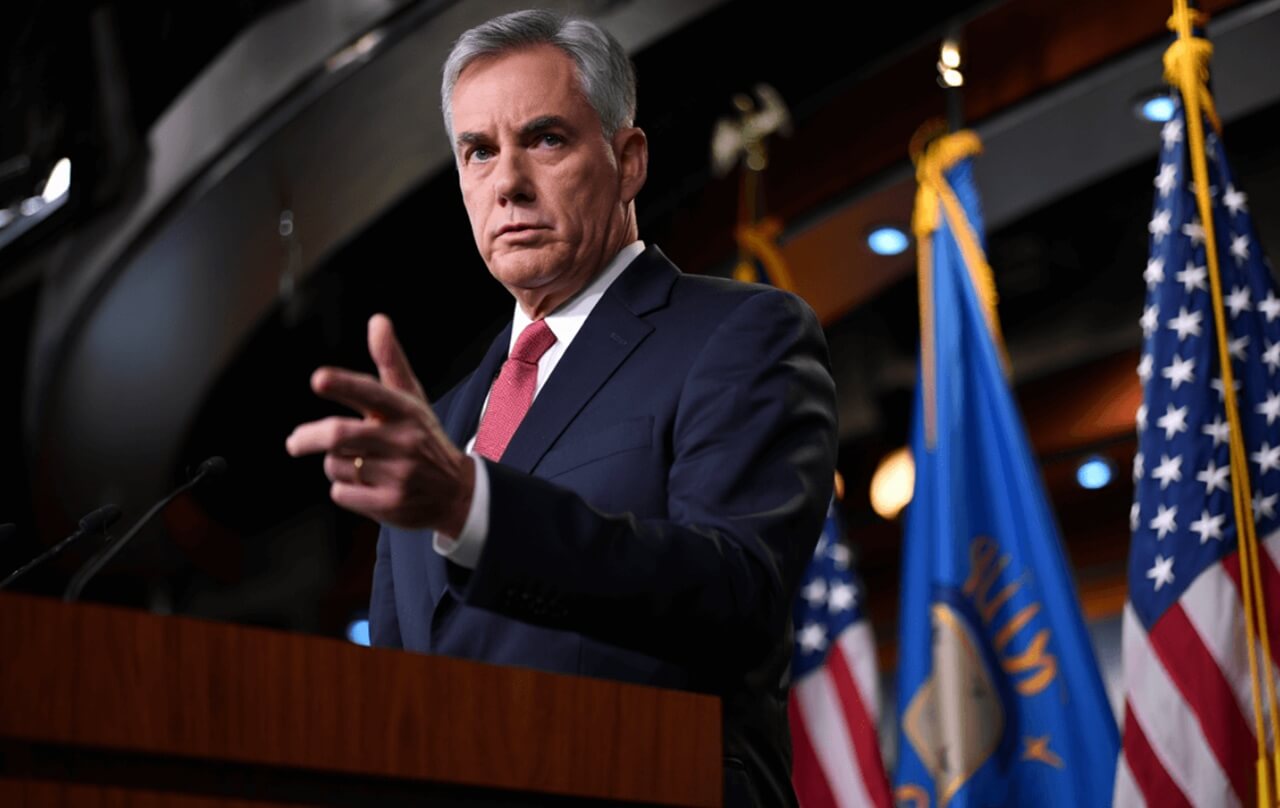
Interior Secretary Doug Burgum has intensified criticism of California’s energy policies, arguing the state poses a “national security risk” due to its high reliance on foreign energy imports. His comments signal a broader Trump administration strategy to challenge blue-state environmental regulations and reframe energy policy as a security imperative.
Speaking this week, Burgum said California’s decisions have created both economic and strategic vulnerabilities—raising energy costs nationwide and weakening domestic energy independence.
Energy Costs Divide Red and Blue States
According to data cited by the Interior Secretary, blue states average $0.18 per kilowatt-hour, significantly higher than $0.11 in red states. Burgum argues that restrictive environmental rules, limits on fossil fuel development, and resistance to new infrastructure projects have inflated prices for millions of consumers.
The disparity, he says, is not only an economic issue but a policy failure that skews the national energy cost average upward.
| Metric | Blue States | Red States |
|---|---|---|
| Avg. Electricity Cost | $0.18/kWh | $0.11/kWh |
| Import Dependency | 63% foreign (CA) | Much lower |
| Policy Focus | Emissions limits | Domestic production |
Burgum claims California’s and New England’s choices force the rest of the country to compensate for higher wholesale prices and reduced grid reliability.
Why Burgum Calls California a National Security Risk
California imports 63% of its energy from foreign sources, a fact Burgum says exposes the United States to geopolitical volatility. He argues that an overreliance on imports undermines energy resilience at a time when global supply chains face unprecedented instability.
He also criticized policies that restrict natural gas production, limit refineries, and block new power plants in favor of renewable expansion without adequate baseload backups.
“We need power plants that run around the clock,” Burgum stated, emphasizing his support for traditional energy sources over what he described as “fragile, intermittent alternatives” preferred in many blue states.
A Federal Push Against State-Level Restrictions
The comments highlight a growing divide between the Trump administration and state regulators over who should shape the nation’s energy direction. Burgum’s remarks suggest the administration may pursue greater federal oversight of energy policy, especially where state rules conflict with national objectives.
California officials, however, defend their strategy as essential to long-term climate goals and argue their policies support innovation and renewable infrastructure growth.
Still, Burgum’s assessment echoes broader federal concerns that regional decisions can have nationwide impacts on pricing, reliability, and national security.
What’s Next for U.S. Energy Policy?
Burgum’s remarks add momentum to the administration’s push for increased domestic production and a rollback of environmental regulations. The Interior Secretary’s stance—pairing cost concerns with national security messaging—could influence future federal action targeting state-level restrictions.
Energy analysts expect mounting legal and political battles over jurisdiction, as both state leaders and the federal government claim authority over America’s energy roadmap.
For businesses and consumers, the cost divide will remain a central issue heading into 2026. Much depends on how aggressively Washington pursues its strategy—and how blue states respond.