Silver prices surged past $62 per ounce on Thursday, delivering one of the strongest precious-metal rallies in modern history. The metal’s rapid ascent follows the Federal Reserve’s third interest rate cut of 2025, a move that sent shockwaves across global markets and intensified investor demand for safe-haven commodities.
With silver now up 115% year-to-date, the white metal has become one of 2025’s most explosive asset classes—far outpacing gold and every major stock index.
Record Silver Prices Driven by Fed Cuts and Weakening Dollar
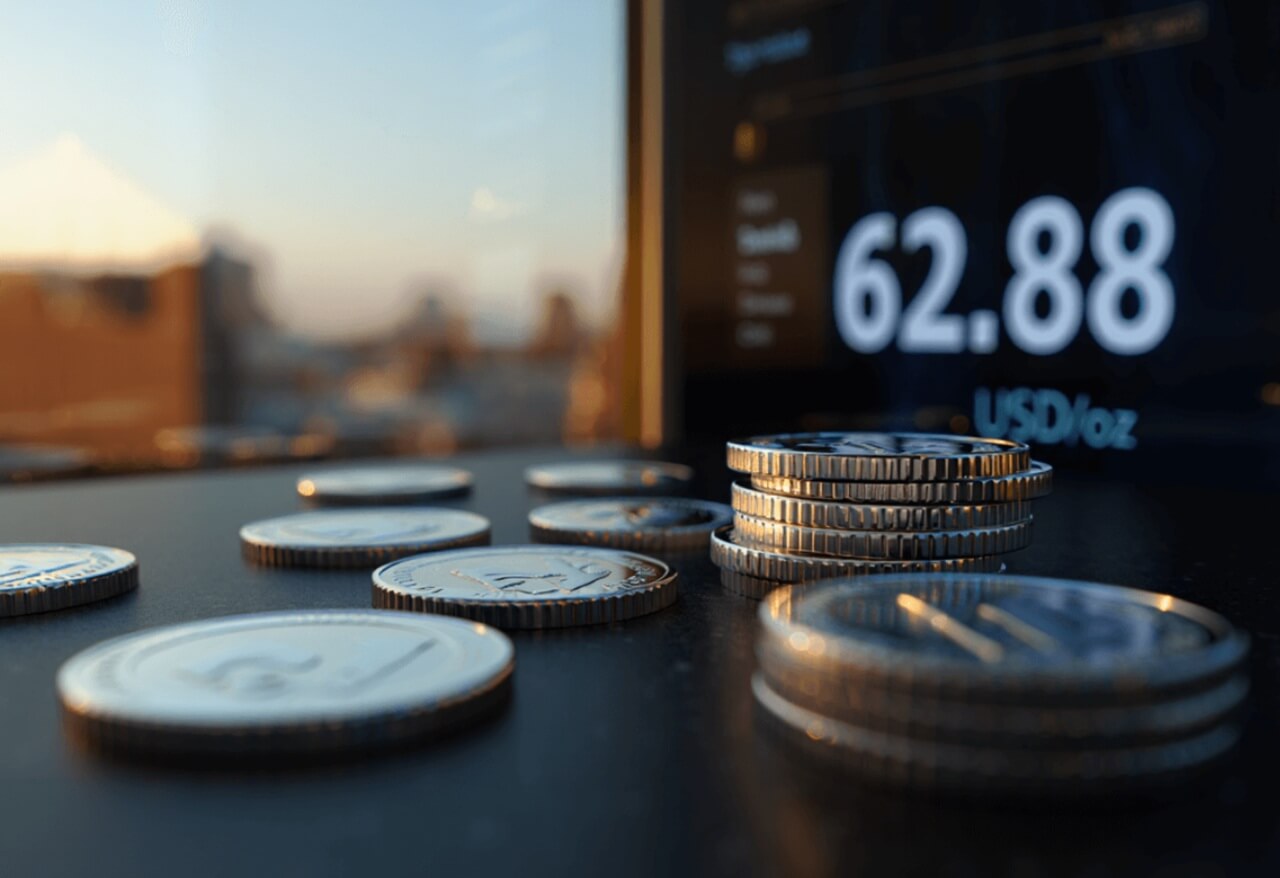
Silver hit an intraday peak of $62.88 per ounce on December 11, breaking its previous all-time high and extending its multi-month bull run. Analysts say the timing is no coincidence. On December 10, the Federal Reserve cut rates by 25 basis points, lowering the federal funds target range to 3.5%–3.75%.
Lower interest rates traditionally weaken the U.S. dollar, boosting the appeal of precious metals. Silver, which carries both monetary and industrial value, has become a key beneficiary of investors looking for inflation protection and currency diversification.
Market analysts note that the magnitude of this rally surpasses all expectations.
Silver’s Performance in 2025 Leaves Gold in the Dust
Silver’s year-to-date gain has soared to 115%, compared to gold’s roughly 60–65% increase.
| Metric | Value |
|---|---|
| Current Silver Price | $62.16/oz |
| Record High | $62.88/oz |
| YTD Gain | 115% |
| Gold YTD Gain | 60–65% |
| Fed Funds Rate | 3.50%–3.75% |
This sharp divergence suggests investors are increasingly viewing silver as the preferred asset for balancing inflation concerns with industrial growth trends.
Industrial Demand Surges as Global Supply Tightens
Silver supply constraints are adding fuel to the rally. Global mined output is expected to fall to 820 million ounces in 2025, continuing a multi-year decline. Meanwhile, demand is rising sharply from:
Electric vehicle (EV) manufacturing
Solar photovoltaic (PV) production
Electronics and semiconductor fabrication
Industry groups estimate a cumulative 796 million-ounce supply deficit between 2021 and 2025—one of the largest structural shortages in recent history.
With silver playing an essential role in clean energy technologies, long-term demand appears resilient regardless of monetary policy cycles.
Why the Fed’s Rate Cut Matters
The Fed’s rate cut reflects concerns about slowing economic momentum heading into 2026. Lower borrowing costs weaken yields on interest-bearing assets, making non-yielding assets like silver more attractive.
Though some Fed officials expressed division over the pace of future cuts, the market interpreted the decision as a green light for continued precious metal strength.
Will Silver Prices Break Even Higher in 2026?
Forecasts vary widely, but most analysts remain bullish:
Conservative ranges: $56–$65 per ounce
Aggressive projections: $75–$133 per ounce
The key wildcard remains industrial consumption. If EV and solar sectors outperform expectations in early 2026, silver demand could tighten further, accelerating price momentum into the new year.